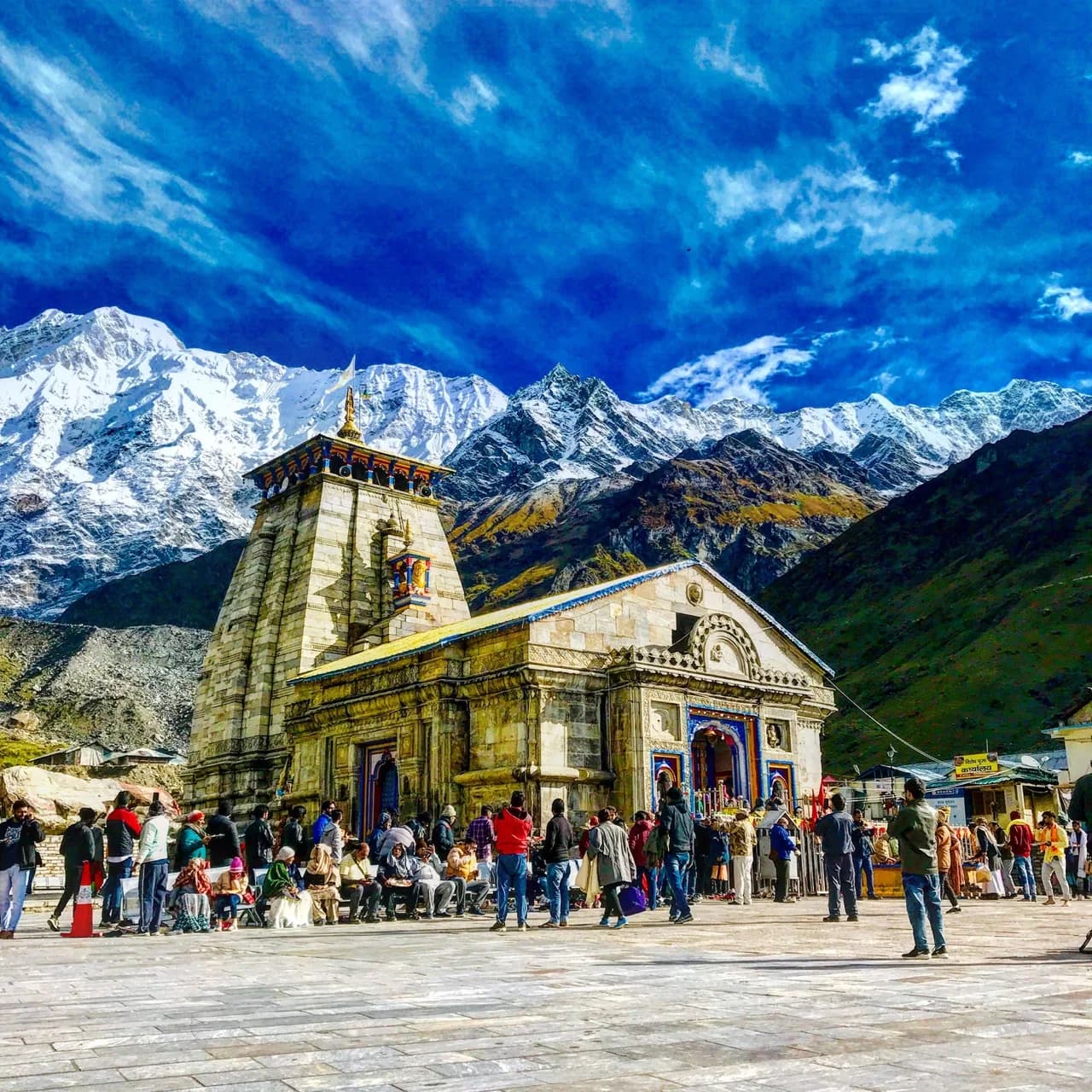
Haridwar to Kedarnath — Distance Summary
- Haridwar → Gaurikund (trek base): 249 km by road | ~8–9 hours drive
- Gaurikund → Kedarnath Temple: 16 km trek | 5–7 hours on foot (or 7–10 min by helicopter)
- Total distance (Haridwar to Kedarnath): ~265 km door-to-door
The Complete Route: Haridwar to Kedarnath
The road journey from Haridwar to Gaurikund follows the National Highway through the Garhwal Himalayas:
- Haridwar → Rishikesh: 24 km (~45 min)
- Rishikesh → Devprayag: 69 km (~2 hrs). Devprayag is the sacred confluence of Alaknanda and Bhagirathi rivers that form the Ganga.
- Devprayag → Rudraprayag: 75 km (~2 hrs). Another major confluence — Mandakini and Alaknanda. Most vehicles stop for a short break here.
- Rudraprayag → Ukhimath / Guptkashi: 45 km (~1.5 hrs). Turn off the main Badrinath highway here. Many pilgrims stay overnight in Guptkashi (2 km before Kund) to break the journey.
- Guptkashi → Sonprayag: 27 km (~45 min). Last point for most private vehicles.
- Sonprayag → Gaurikund: 5 km by shared jeep or bus (~15 min). Private vehicles are not allowed beyond Sonprayag.
Travel Time: Haridwar to Gaurikund
- By private cab: 8–9 hours (direct, no overnight stay)
- By government bus (GMOU/UPSRTC): 10–12 hours (buses are slower and make more stops)
- Most recommended: Overnight at Guptkashi (break the 249 km into two comfortable days). Day 1: Haridwar → Guptkashi (220 km, ~7 hrs). Day 2: Guptkashi → Gaurikund → Kedarnath.
Stopover Options Along the Route
- Devprayag (69 km from Haridwar) — Short photo stop at the Sangam (confluence). 30 minutes maximum.
- Rudraprayag (144 km from Haridwar) — Lunch stop. Many restaurants near the bridge. 1–1.5 hours.
- Guptkashi (220 km from Haridwar) — Ideal overnight stop. Hotels, restaurants, ATMs. Vishwanath Temple nearby. Distance from here to Gaurikund: 29 km (~1 hour).
Haridwar to Kedarnath by Helicopter
If you want to skip the trek, the helicopter option does not start from Haridwar — the nearest helipads are:
- Phata helipad: 220 km from Haridwar (near Guptkashi). 7-minute flight to Kedarnath. ₹4,500–5,500 one way.
- Sirsi helipad: 225 km from Haridwar. Similar pricing.
- Guptkashi helipad: 220 km from Haridwar. ₹6,500–7,500 one way (longer route).
So even with a helicopter, you still need to drive ~220–225 km from Haridwar to reach the helipad. Read our full Kedarnath Helicopter Booking Guide for booking steps.
Book Your Kedarnath Yatra from Haridwar
Junegiri Yatra is Haridwar-based and arranges all Kedarnath packages including pick-up from Haridwar Railway Station or Har Ki Pauri. Our Kedarnath Yatra 3N/4D package starts at ₹8,500 per person and covers the full journey from Haridwar to Kedarnath and back.
Complete Road Conditions and Driving Tips
The Haridwar to Kedarnath road is one of India's most dramatically beautiful mountain drives - but it requires careful planning. Here is what to expect on each leg:
Haridwar to Rishikesh (24 km)
This stretch runs along the Ganges on the Rishikesh-Haridwar road (NH-58). Traffic is usually manageable except on weekends during pilgrimage season. Rishikesh is the last major city with banks, ATMs (withdraw here - ATMs beyond Ukhimath are unreliable), pharmacies, and equipment shops. If you need trekking poles, warm clothing, or altitude medication, buy in Rishikesh.
Rishikesh to Devprayag (69 km)
The road begins climbing through the Garhwal foothills. Devprayag is the sacred confluence (Prayag) where the Bhagirathi and Alaknanda rivers meet to form the Ganga. A short 10-minute stop here is worth it - the confluence viewed from the Devprayag temple steps is striking, with the two rivers of contrasting blue (Alaknanda) and brown-green (Bhagirathi) colours merging clearly visible.
Devprayag to Srinagar Garhwal (35 km)
Srinagar is a large Uttarakhand town with good hotels, restaurants, and fuel stations. If you are driving yourself and need fuel, fill up here. The Hemvati Nandan Bahuguna Garhwal University is located here, making it livelier than the mountain towns further up.
Srinagar to Rudraprayag (30 km)
Rudraprayag (972m) is where the Mandakini river (coming from Kedarnath) meets the Alaknanda. This is a crucial junction - from here, you leave the main Badrinath Highway and take the road along the Mandakini towards Kedarnath. Most pilgrims stop for lunch here. Good dhaba restaurants along the main road. The Chamunda Devi Temple at the confluence is a quick visit.
Rudraprayag to Guptkashi (65 km)
This stretch follows the Mandakini river valley upstream. The road is mostly good but has sections of hairpin bends. Tilwara (22 km from Rudraprayag) is a small town with basic facilities. Agastyamuni (38 km from Rudraprayag) has decent hotels and is a popular overnight stop for groups arriving too late to push to Guptkashi. The Triyuginarayan temple (12 km detour from the main road near Sonprayag) is where the mythological wedding of Shiva and Parvati took place - worth visiting if you have an extra half-day.
Guptkashi (1,319m) is a small but excellent overnight base. It has the best range of hotels on the Kedarnath route, an ATM, pharmacies, and the famous Vishwanath temple (a 7th-century replica of the Varanasi Kashi Vishwanath). If you arrive in the late afternoon, the evening aarti at Vishwanath Guptkashi is beautiful.
Guptkashi to Sonprayag (27 km)
The road narrows significantly after Guptkashi. Sonprayag (1,829m) is the point where private vehicles are stopped. You must park here and take a shared jeep or government bus (5 km) to Gaurikund. The Sonprayag check post also verifies your Kedarnath biometric registration - have your printed slip ready.
Gaurikund - Trek Base (1,982m)
Gaurikund is where the Kedarnath trek begins. Facilities here:
- Luggage storage rooms - lock your main bags here, carry only a daypack for the trek
- Tapt Kund hot spring - pilgrims bathe here before the trek as a ritual purification
- Gauri Devi temple - a visit before starting the trek is considered auspicious
- Pony/porter hiring point - register ponies and porters at the official counter
- Basic pharmacies and snack shops
The Kedarnath Trek - 16 km Route Guide
The trek from Gaurikund to Kedarnath temple covers 16 km with an altitude gain of 1,600m (from 1,982m to 3,584m). The trail is paved for most of its length:
- Gaurikund to Jungle Chatti (4 km): Moderate ascent through forest. Good shade. Last point with a BSNL mobile signal.
- Jungle Chatti to Bheembali (6 km): More open terrain. Views of Kedarnath valley opening up. Tea stalls and basic snack points at both ends.
- Bheembali to Lincholi (8 km): Ascent steepens. Altitude begins to be felt. Walk slowly and hydrate constantly.
- Lincholi to Base Camp (12 km): Above the tree line. Spectacular open views. First glimpse of the Kedarnath temple spire from here.
- Base Camp to Kedarnath Temple (14-16 km): Final 2-4 km along the valley floor with the temple ahead. Relatively flat but at high altitude (3,500m+). Take it slowly.
Important Planning Notes
Road Closure Periods
The Badrinath National Highway (NH-7, which covers part of the Kedarnath route) is officially closed approximately November to April due to snowfall. The exact dates vary by year. In 2026, the highway is expected to reopen in mid-April ahead of the May opening of Kedarnath.
Seasonal Road Conditions
- May-June: Road generally good. Risk of landslides during pre-monsoon rains. Drive in morning hours.
- July-August: Monsoon. Regular landslides and road blocks, especially between Rudraprayag and Sonprayag. Build buffer days into your itinerary.
- September-October: Best road conditions. Clear skies. Occasional early snowfall in October.
Overnight Stop Recommendations
Based on our experience running hundreds of Kedarnath Yatra groups, the ideal overnight stop pattern from Haridwar:
- Day 1 (Haridwar to Guptkashi): 220 km, 7-8 hours drive. Arrive by 4 PM for evening temple visit.
- Day 2 (Guptkashi to Gaurikund to Kedarnath): Drive 29 km (1 hour). Trek (5-7 hours). Arrive Kedarnath by 4-5 PM. Evening Shayan Aarti at 7 PM.
- Day 3 (Kedarnath Morning Darshan + Descent): Early morning darshan (4:30-6 AM). Descend to Gaurikund. Drive onward to Badrinath (Do Dham) or return to Haridwar.
Book Kedarnath Yatra from Haridwar
Junegiri Yatra has operated Kedarnath Yatra packages from Haridwar since 2017. Our team knows every check post, every good hotel, and every shortcut on this route. The Kedarnath Yatra 3N/4D package starts at Rs. 8,500 per person (group of 4) including private vehicle, all accommodation, meals, guide, biometric registration, and all permits.
For a personalised quote or to ask about road conditions, WhatsApp our Haridwar team at +91 98738 97652.
Kedarnath Yatra Registration - Step-by-Step Guide for 2026
The biometric registration process is mandatory for all Kedarnath pilgrims since 2023. Here is the complete process:
- Visit the portal: registrationandtouristcare.uk.gov.in
- Create an account: Enter your mobile number to receive an OTP. Create a password.
- Add pilgrim details: Enter Aadhaar number for Indian nationals or passport number for foreign nationals. Take a photograph (webcam or upload). Enter personal details.
- Select Kedarnath Yatra: Choose your preferred visit date and slot (morning, afternoon).
- Medical declaration: All pilgrims aged 50+ must upload a medical fitness certificate from an MBBS doctor. Younger pilgrims sign a self-declaration.
- Download your registration slip: Print the slip and keep it accessible throughout the yatra. You will need it at Rishikesh check post, Rudraprayag check post, Sonprayag check post, and the Gaurikund gate.
Registration Timing Tips
- Opening week slots (late April - early May): Registration goes live at Mahashivratri (February 2026) and fills within 48-72 hours. Book immediately when registration opens.
- Peak May-June weekends: Book 3-4 weeks in advance.
- September-October: Book 1-2 weeks in advance (much easier).
Kedarnath Yatra by Bus - Step-by-Step Guide
For pilgrims on a strict budget, the Kedarnath Yatra can be completed by public buses and shared jeeps. Here is the complete sequence from Haridwar:
- Haridwar to Rishikesh: UPSRTC local bus (Rs. 30-40, 45 minutes) from Haridwar bus stand
- Rishikesh to Rudraprayag: GMOU bus or shared taxi (Rs. 200-300, 4-5 hours)
- Rudraprayag to Guptkashi: Shared jeep (Rs. 150-200, 2 hours)
- Guptkashi to Sonprayag: Shared jeep (Rs. 50-80, 45 minutes)
- Sonprayag to Gaurikund: Shared government jeep (Rs. 30-50, 15 minutes)
- Gaurikund to Kedarnath: 16 km trek (on foot or pony)
Total bus/shared transport cost Haridwar to Gaurikund: Rs. 450-650 per person. Disadvantages: slower, less comfortable, dependent on bus schedules, no guaranteed seat at peak season. Our private vehicle packages (starting at Rs. 8,500/person all-inclusive) provide significantly better value when divided across a group of 4-6.
Kedarnath Yatra Emergency Information
Every pilgrim should know these emergency resources before starting the trek: SDRF Rescue Post at Gaurikund (altitude support and first aid): +91-1364-233600. District Emergency Operations Centre Rudraprayag: 1077 (toll-free). GMVN emergency helpline: 0135-2559898. The Badri-Kedar Temple Committee helpline (temple information): 0135-2430169. Save these numbers in your phone before starting. Our Junegiri Yatra WhatsApp line (+91 98738 97652) is monitored 24/7 for all active groups on the trail. For all Junegiri Yatra Kedarnath package guests, we also provide the current guide's mobile number, a backup emergency contact, and a pre-trek briefing on altitude sickness prevention and evacuation procedures.
The Kedarnath route passes through six of the five sacred Panch Prayags (five major river confluences on the Alaknanda river): Devprayag (Bhagirathi-Alaknanda), Rudraprayag (Mandakini-Alaknanda), Karnaprayag (Pindar-Alaknanda), Nandprayag (Nandakini-Alaknanda), and Vishnuprayag (Dhauliganga-Alaknanda). Each confluence is considered sacred and has a small temple at the riverside. The complete Char Dham highway passes all five, making the drive itself a pilgrimage within a pilgrimage. Most drivers know these stops and can point them out as you pass through. The Devprayag confluence viewed from the steps of the temple (15 minutes from the road) is the most visually dramatic and worth a brief stop.
Plan your 2026 Kedarnath Yatra with Junegiri Yatra - call or WhatsApp our Haridwar team for road condition updates, registration assistance, and package bookings: +91 98738 97652. Our office is 10 minutes from Har Ki Pauri - we know this route better than anyone.
Key Villages and Waypoints on the Kedarnath Route
Beyond the main stops, several smaller villages along the route have historical and spiritual significance. Tilwara (22 km from Rudraprayag) has the Siddhnath Temple on the banks of the Mandakini - a peaceful 15-minute detour. Ukhimath (40 km from Rudraprayag) is where the Kedarnath deity spends winter at the Omkareshwar Temple - worth a visit if you are in the area in the winter months. Triyuginarayan Temple (12 km from Sonprayag) is the mythological wedding venue of Shiva and Parvati. The eternal fire at Triyuginarayan has a compelling legend: it is said to have burned continuously for three yugas (cosmic ages). The detour from Sonprayag adds 1 hour to your itinerary.
Practical Tips for First-Time Travellers
Book your Haridwar to Kedarnath trip at least 3-4 weeks in advance during peak season (May-June). Carry cash as ATMs are scarce beyond Guptkashi. Wear layered clothing as temperatures can drop sharply at higher altitudes. A basic first-aid kit and altitude sickness medication (Diamox) is advisable. Most importantly, register your biometrics at the designated centres in Haridwar or Rishikesh before proceeding to the Yatra route.
Keep planning your Kedarnath trip
Continue with our Kedarnath complete guide, Kedarnath helicopter booking guide, and Kedarnath 2026 opening date. When you're ready, explore our all-inclusive Kedarnath trip package — organised end-to-end by our Haridwar-based team.