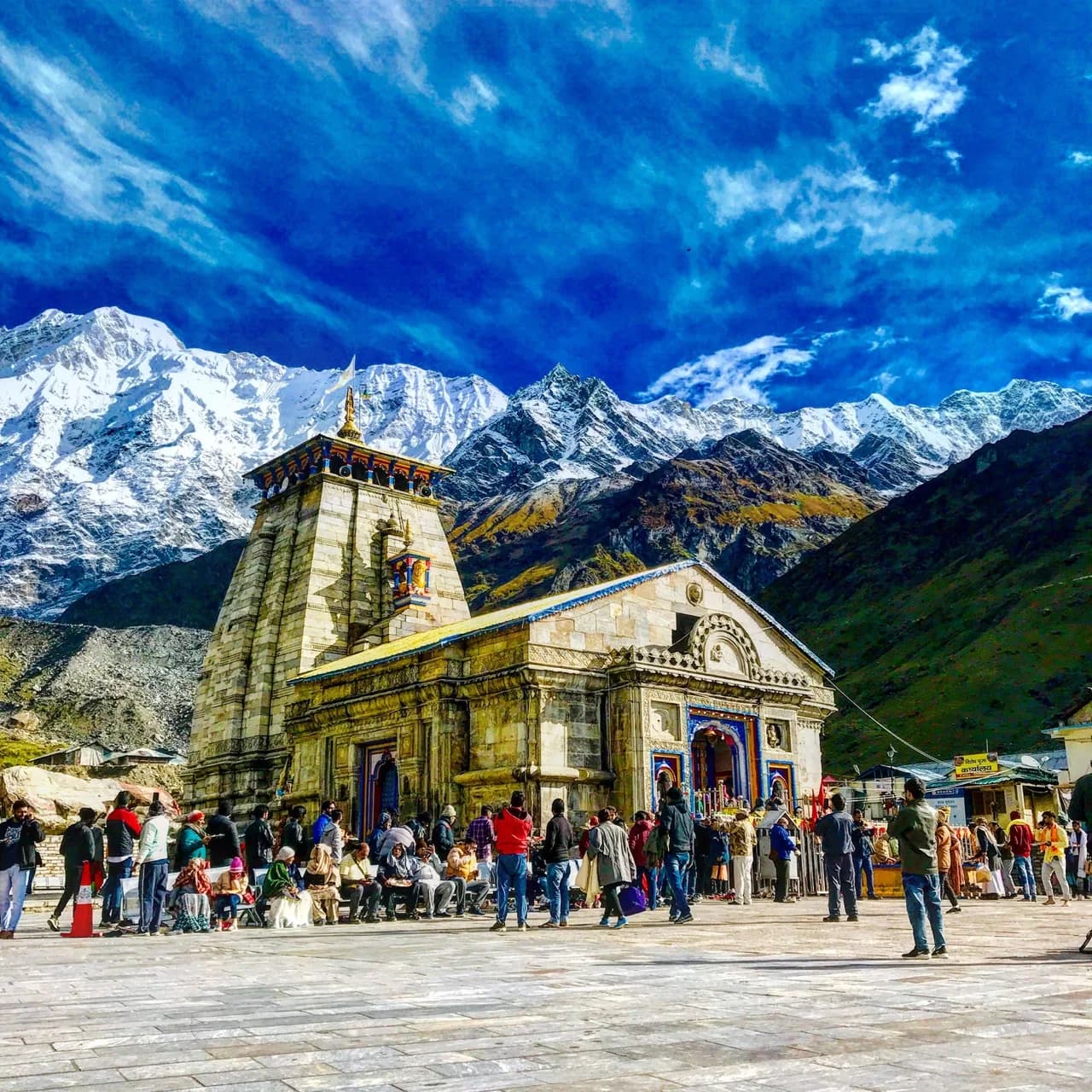
About Kedarnath — One of the 12 Jyotirlingas
Kedarnath is one of the holiest shrines in Hinduism — one of the 12 Jyotirlingas of Shiva and the highest among the Panch Kedar. Situated at 3,584 metres in the Garhwal Himalayas of Uttarakhand, the stone temple is estimated to be over 1,000 years old, built by the Pandavas according to legend and restored by Adi Shankaracharya in the 8th century. The shrine sits in a natural amphitheatre of snow-capped peaks, with the Mandakini river rushing below.
Every year from late April to November, hundreds of thousands of pilgrims undertake the journey. The rest of the year the temple is closed and the deity is shifted to Ukhimath for the winter.
How to Reach Kedarnath — Step by Step
Step 1: Reach Haridwar or Rishikesh
Most pilgrims fly into Jolly Grant Airport, Dehradun (the nearest airport, 35 km from Rishikesh) or reach Haridwar by train. Both cities are well-connected to Delhi and other major cities. Our Kedarnath Yatra 3N/4D package starts from Haridwar.
Step 2: Drive to Sonprayag
From Haridwar/Rishikesh take a bus or car via Rudraprayag to Sonprayag (approximately 7–8 hours). Road distance: ~225 km. Sonprayag is the last point for private vehicles. From here, shared jeeps and government buses run to Gaurikund (5 km).
Step 3: Gaurikund — Trek Base
Gaurikund (1,982 m) is where all trekkers start. There are luggage lockers, basic lodges, pharmacies, and a natural hot spring (Tapt Kund). Store your main luggage here; carry only a daypack for the trek.
Step 4: The Trek (14 km, ~6–8 hours)
The trekking route from Gaurikund to Kedarnath covers 14 km of well-maintained trail with gradual ascent. Key waypoints: Jungle Chatti (4 km), Bheembali (6 km), Lincholi (8 km), Base camp (12 km), Kedarnath (14 km). The trail is paved with stone slabs for most of the route.
Helicopter vs Trek — Which Should You Choose?
Both options are completely valid. Here is a side-by-side comparison:
- Trek — ₹0 beyond your own costs. Takes 5–7 hours up, 4–5 hours down. Physical, spiritual, and deeply rewarding. Recommended for pilgrims aged 18–55 who are reasonably fit.
- Helicopter — ₹4,500–7,000 per person one way (2026 rates). Takes 7–10 minutes. Ideal for elderly pilgrims, those with mobility issues, or those with limited time. Helipads operate from Phata, Sirsi, Guptkashi, Agastmuni, and Sonprayag.
See our detailed Kedarnath Helicopter Booking Guide for booking steps, cancellation policies, and weather advisories.
Biometric Registration — Mandatory Since 2023
All pilgrims must complete biometric registration before proceeding to Kedarnath. Registration is done online at registrationandtouristcare.uk.gov.in or at designated offline centres in Haridwar, Rishikesh, and Rudraprayag.
- Register at least 2–3 days before your planned trek date.
- You will receive a registration number tied to your Aadhaar or passport.
- Print the slip and keep it accessible — it is checked at every check post.
- Day-wise quotas apply; popular dates (May opening week, weekends) fill up fast.
Best Time to Visit Kedarnath
- May–June — Best weather, full crowd but manageable. Temple opens in late April/early May.
- September–October — Post-monsoon clarity. Crowds are lower, skies are crystal clear, peaks visible.
- July–August — Monsoon season. Landslide risk, trail can be slippery. Not recommended unless you are an experienced trekker.
- November — Temple closes for winter (usually first week of November). Last few days see heavy snowfall.
Accommodation at Kedarnath
Options near the temple are basic but sufficient:
- GMVN (Garhwal Mandal Vikas Nigam) Guest Houses — government-run, reliable, book in advance at gmvnl.com
- Tented camps — seasonal, operated by private agencies. Basic mattress, blankets, communal bathrooms. ₹500–800/night.
- Dharamshalas — run by religious trusts; inexpensive, basic amenities.
Most pilgrims stay one night at Kedarnath for the evening aarti and the early morning darshan before descending. Book in advance during peak season.
Darshan Tips — Getting the Best Temple Visit
- Reach the temple by 4:30 AM for the Abhishek (ritual bathing of the Shivalinga) — requires a paid ticket booked in advance through the Badri-Kedar Temple Committee.
- General darshan starts at 6 AM. Lines can be 2–4 hours long on peak days.
- Attend the evening Shayan Aarti at 7 PM — smaller crowd, deeply atmospheric.
- Dress code: traditional attire preferred; shoulders covered; no leather items inside the sanctum.
Keep planning your Kedarnath trip
Continue with our Kedarnath helicopter booking guide, Haridwar–Kedarnath route, and Kedarnath 2026 opening date. When you're ready, explore our all-inclusive Kedarnath trip package — organised end-to-end by our Haridwar-based team.