Haridwar & Rishikesh Spiritual Tour 3N/4D
Surrender to the sacred Ganga — where every ghat, every aarti, and every ashram calls you home
Itinerary & pricing last reviewed by the Junegiri Yatra operations team
About This Tour
The Haridwar & Rishikesh Spiritual Tour 3N/4D is the perfect introduction to the divine energy of the Ganga's upper reaches — a short yet profoundly fulfilling journey into two of India's most sacred cities. Nestled in the foothills of the Himalayas, Haridwar and Rishikesh together form a spiritual sanctuary that has drawn seekers, pilgrims, and yogis from across the world for centuries.
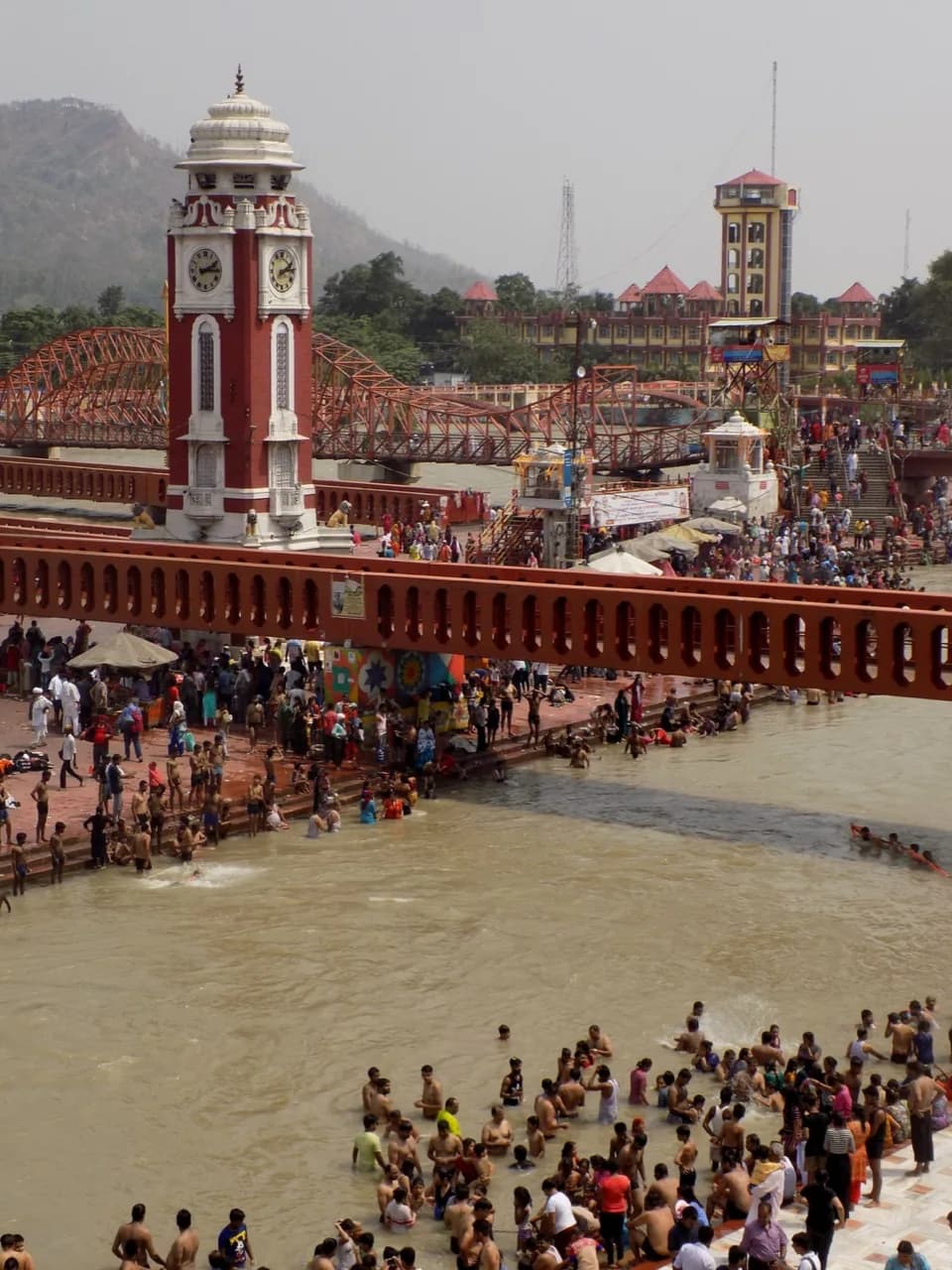
Haridwar, whose name translates to 'Gateway to God', is where the Ganga descends from the mountains onto the plains. The city's spiritual heartbeat is Har Ki Pauri — the sacred ghat where Lord Vishnu is believed to have left his footprint. Every evening, the Ganga Aarti here is a spectacle of devotion: hundreds of lamps lit in unison, priests chanting ancient Sanskrit hymns, the river shimmering with floating diyas, and the air heavy with incense and flower petals. It is an experience that silences the mind and opens the heart. The hilltop temples of Chandi Devi and Mansa Devi, both accessible by cable car, offer panoramic views of the city and the Ganga winding through the hills below.
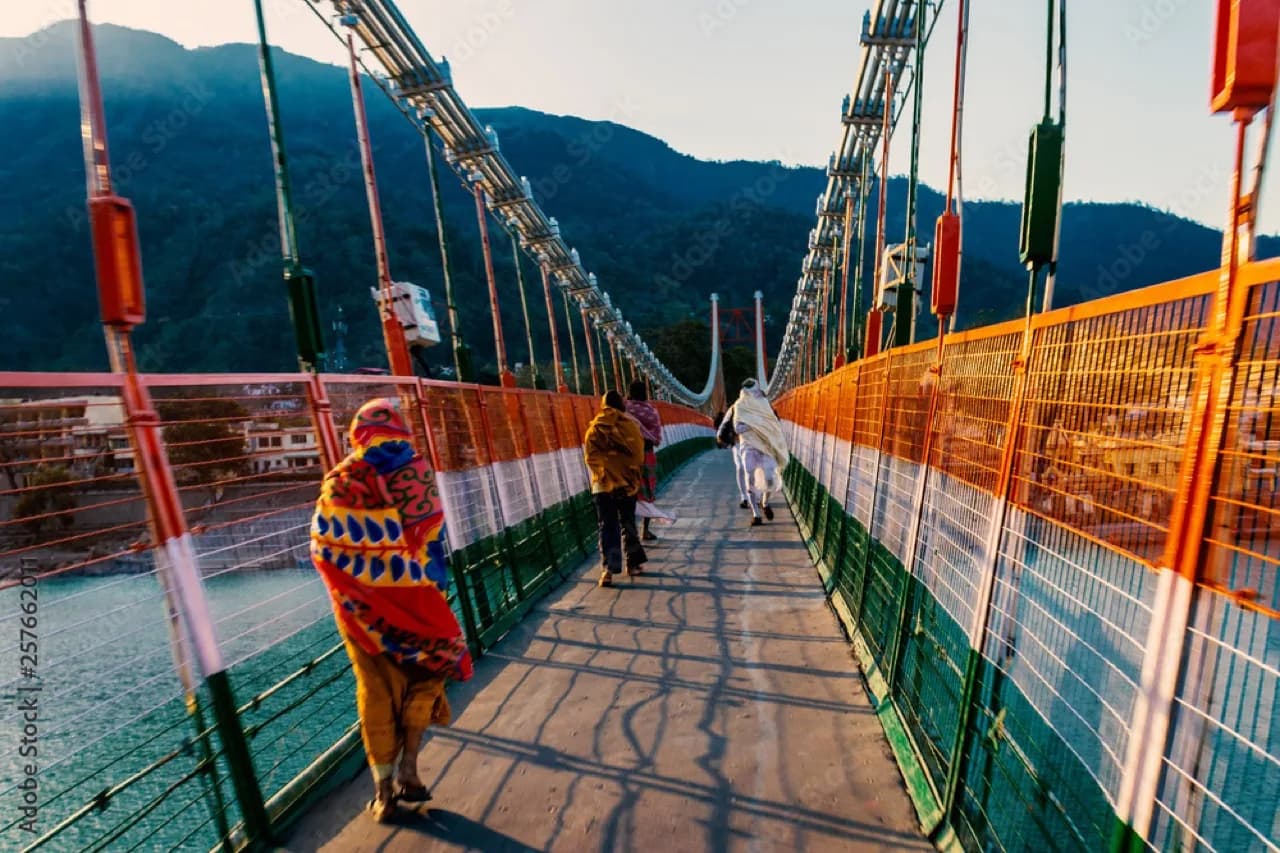
Just 25 km upstream, Rishikesh is the world's yoga capital — a town where the Himalayan air carries the sound of Om and every corner holds an ashram, a meditation hall, or a temple. The iconic Lakshman Jhula and Ram Jhula suspension bridges span the Ganga and lead to a world of temples, cafes, and hermitages on the eastern bank. Parmarth Niketan, one of India's largest ashrams, hosts thousands of guests each year and its evening aarti on the Ganga banks is among the most serene spiritual experiences in the country. The Beatles Ashram (officially Chaurasi Kutia or Maharishi Mahesh Yogi Ashram) carries a legendary legacy — it was here that the Beatles stayed in 1968 and wrote much of the White Album, drawn by Transcendental Meditation.
Whether you are planning a Char Dham Yatra and want to begin with a short spiritual acclimatisation, looking for a yoga retreat in Rishikesh, or simply seeking the peace of the Ganga's upper banks, this 3-night package offers a complete, immersive, and comfortable experience. Junegiri Yatra's local expertise and Haridwar base means you get an insider's view of both cities — away from tourist traps and closer to the authentic spiritual heart of this sacred region. We also offer Char Dham departures from Haridwar if you wish to extend your journey into the high Himalayas.
Day-by-Day Itinerary
What's Included
✓ Included
✗ Not Included
Photo Gallery

What Travelers Say
Haridwar & Rishikesh Travel Guide: Everything You Need to Know
Haridwar and Rishikesh sit at the foot of the Himalayas along the banks of the Ganga in Uttarakhand, India. Together they form one of the most spiritually significant urban corridors in the world — a place where ancient Hindu pilgrimage tradition, Himalayan geography, and the living energy of one of Asia's mightiest rivers converge in an extraordinary way.
Haridwar: Gateway to the Gods
The name Haridwar derives from 'Hari' (Lord Vishnu) and 'dwar' (door or gateway) — making it literally the Gateway to God. It is one of the seven Sapta Puri or sacred cities of Hinduism, and the site where the river Ganga exits the Himalayan foothills onto the plains of North India. This transition point is considered immensely auspicious — pilgrims believe that bathing here washes away sins accumulated across lifetimes.
Har Ki Pauri ('Steps of the Lord') is the spiritual epicentre of Haridwar. The Brahma Kund at this ghat is believed to be the exact spot where drops of Amrit (the nectar of immortality) fell during the mythological Samudra Manthan (churning of the ocean). Every evening, the Ganga Aarti transforms this ghat into an ocean of flame and devotion — it is one of the few rituals in India that runs with clock-like precision and yet never feels mechanical. The best time to arrive is 30 minutes before the aarti begins, as crowds gather quickly.
The twin hilltop temples of Mansa Devi and Chandi Devi are dedicated to aspects of the goddess Shakti. Mansa Devi (goddess who fulfills wishes) sits atop Bilwa Parvat hill, while Chandi Devi stands on Neel Parvat. Both are accessible by cable car (ropeway) that offers sweeping views of Haridwar and the Ganga valley. These temples are part of the Panch Tirtha (five sacred sites) of Haridwar.
The Maya Devi Temple in central Haridwar is one of the most ancient temples in the city and one of the 51 Shakti Peethas — the sites where parts of the goddess Sati's body fell after Lord Vishnu used his Sudarshana Chakra to dismember her. Daksha Mahadev Temple in nearby Kankhal marks the site of the legendary yajna (fire ritual) performed by King Daksha, where Sati immolated herself — an event that set in motion one of Hinduism's most poignant mythological stories.
Rishikesh: World Capital of Yoga
Rishikesh earned the title 'World Capital of Yoga' through decades of hosting spiritual seekers, yogis, and meditators from across the globe. Situated 25 km upstream from Haridwar, the city is divided by the Ganga into a busy town on the western bank and a quieter, more spiritual zone on the eastern bank — accessible via the famous suspension bridges.
Lakshman Jhula is a 450-foot suspension bridge across the Ganga at a point where Lord Lakshman (brother of Lord Ram) is said to have crossed the river on a jute rope. The current iron bridge, built in 1939, sways gently in the breeze and connects the two banks at a height of 70 feet above the water. The eastern approach is lined with temples, ashrams, and small shops selling spiritual paraphernalia. The 13-storey Trayambakeshwar Temple at the Lakshman Jhula end is a landmark worth climbing for its successive temple floors dedicated to different deities. Ram Jhula, 3 km downstream, is a wider, busier bridge that connects to the Parmarth Niketan ashram complex.
Parmarth Niketan was established in 1942 and is today one of India's largest ashrams with 1,000 rooms and facilities for over 2,000 guests. Its Ganga bank is the setting for a nightly aarti that, while smaller in scale than Haridwar's, is often described by visitors as more intimate and meditative. The ashram hosts the International Yoga Festival every March, attracting yoga teachers and practitioners from over 100 countries.
The Maharishi Mahesh Yogi Ashram — universally known as the Beatles Ashram — was established in the 1960s and became world-famous when the Beatles (John Lennon, Paul McCartney, George Harrison, and Ringo Starr) visited in February 1968 to study Transcendental Meditation. They spent over six weeks here and wrote dozens of songs that would appear on the White Album and Abbey Road. The ashram fell into disuse in 1997 and was handed over to the Forest Department in 2003. Today it operates as a nature and heritage site with the original meditation domes (called 'beehive huts'), the main lecture hall, and dozens of buildings covered in remarkable murals. The forest setting adds to the mystique of the visit.
Practical Tips for Visiting Haridwar and Rishikesh
Haridwar is a dry city — the sale and consumption of alcohol is prohibited by law. Rishikesh, while technically permitting it, maintains a largely spiritual atmosphere. Non-vegetarian food is difficult to find in either city. Carry comfortable walking sandals you can easily slip off at temple entrances. Both cities are safest visited without flashy jewellery or expensive electronics displayed openly. The Ganga current is extremely strong — swimming in the river is not advisable without proper guidance. The cable cars at Mansa Devi and Chandi Devi have peak hour queues — plan to visit on weekday mornings for shorter wait times. If you are prone to motion sickness, take precautions before the cable car rides. The Ganga water, while sacred, should not be consumed without purification — the city's rapid urbanisation has affected water quality at the lower ghats.
Frequently Asked Questions
Ready to Book?
WhatsApp us for instant confirmation, custom dates, and group pricing.
Who plans this trip
This itinerary is planned and operated by Junegiri Yatra— a Haridwar-based pilgrimage & Himalayan trek operator running Himalayan circuits since 2017, run by Vignesh Waram, Yash Negi and Sumit Nautiyal, licensed by Uttarakhand Tourism (ATOI-approved). Our team runs the Char Dham, Valley of Flowers, Kedarnath and Himalayan trek circuits end-to-end, so every route, cost and timing detail on this page comes from first-hand operating experience. More about the team →