Why Varanasi Moves Every Visitor
Varanasi — also called Kashi or Benares — is among the oldest continuously inhabited cities on earth, with a documented history of 3,000+ years. Situated on the sacred curve of the Ganges river, it is where Hindus believe life, death, and liberation converge. Mark Twain called it 'older than history, older than tradition, older even than legend.' No description fully prepares you.
For international visitors, Varanasi is often the most emotionally overwhelming destination in India — confronting, beautiful, chaotic, and deeply human all at once. Allow 2–3 days minimum.
The Ghats of Varanasi — What to Know
Varanasi has 88 ghats — stepped stone riverbanks stretching 7 km along the Ganges crescent. Each has its own character and ritual purpose:
- Dashashwamedh Ghat: The main ghat. Site of the grand evening Ganga Aarti. Most accessible and photogenic.
- Manikarnika Ghat: The main cremation ghat. Open-air cremations happen here 24 hours a day. Photography is deeply disrespectful — do not photograph. Approach with silence and sensitivity.
- Assi Ghat: Southern end. Quieter, popular with foreign students and yoga practitioners. Morning aarti here is intimate and beautiful.
- Harishchandra Ghat: Second cremation ghat, older than Manikarnika. Smaller, less crowded.
- Scindia Ghat: Famous for its half-submerged temple — a Shiva temple that sank due to the weight of its construction.
Ganga Aarti at Dashashwamedh Ghat
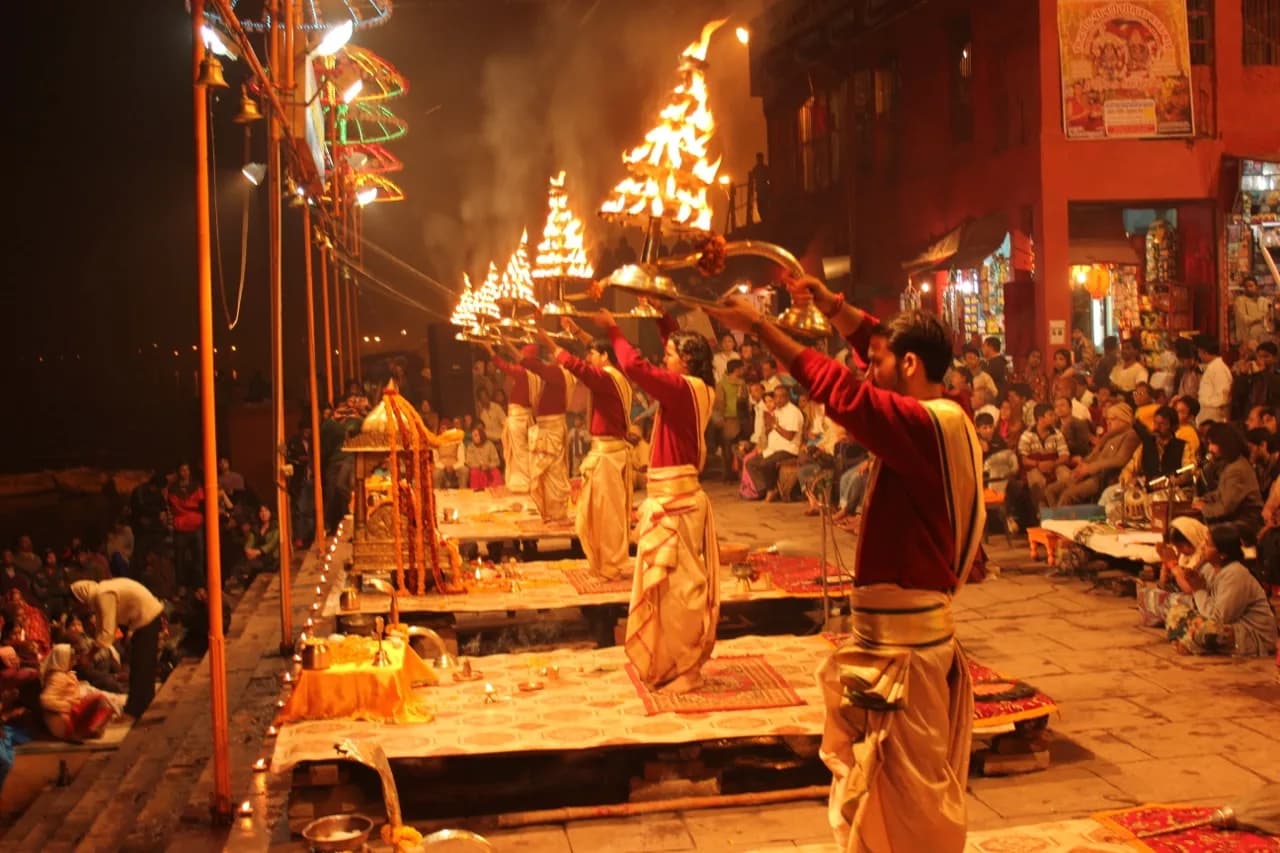
The daily sunset Ganga Aarti at Dashashwamedh Ghat is Varanasi's defining experience. Seven priests in saffron robes perform a choreographed fire ritual simultaneously — waving brass lamps, incense, and flowers to the river. The ceremony begins at sunset (approximately 6–7 PM depending on season). Arrive 30–45 minutes early and position on the steps or hire a boat for the view from the river. Free to attend.
Dawn Boat Ride on the Ganges
A sunrise boat ride along the ghats is non-negotiable for any Varanasi visit. Set off at 5–5:30 AM to watch pilgrims bathing in the mist, sadhus meditating on the steps, and the city waking against a golden sky. An hour-long boat ride costs ₹300–600 per boat (negotiate before boarding). Our packages include a private boat with an experienced boatman who knows all the ghats.
Kashi Vishwanath Temple
One of the 12 Jyotirlingas of Shiva and the most sacred Hindu temple in Varanasi. The temple was rebuilt in 1780 by Maharani Ahilyabai Holkar. Non-Hindus were traditionally not permitted inside the main sanctum — however the new Kashi Vishwanath Corridor (inaugurated 2022) allows all visitors of any nationality to walk through the corridor and view the temple's exterior and adjacent shrines. Entry: free. Photography: restricted inside the temple.
Sarnath — Where Buddha Gave His First Sermon
11 km from Varanasi, Sarnath is where Siddhartha Gautama gave his first sermon after attaining enlightenment at Bodh Gaya. The Dhamek Stupa (274 BC, restored) marks the exact spot. The Sarnath Archaeological Museum houses the famous Lion Capital of Ashoka — India's national emblem — in its original, undamaged form. Allow 2–3 hours. Best visited as a morning or afternoon trip from Varanasi.
How to Get to Varanasi from Delhi
- Flight: Delhi to Varanasi (Lal Bahadur Shastri Airport, VNS) — 1.5 hours, multiple daily flights by IndiGo, Air India, SpiceJet. From ₹2,500–6,000 one way. Recommended.
- Train: Vande Bharat Express (8 hours, very comfortable), Kashi Express, Vibhuti Express from Delhi. Book on irctc.co.in. AC sleeper classes are good for overnight travel.